United States Bureau of Impossible PatentsБюро невозможных патентов СШАBureau américain des brevets impossibles
Perpetual Motion Engine, Type CДвигатель вечного движения, тип CPerpetual Motion Engine, Type C
Patent № US-IMP-2,847,???Патент № US-IMP-2,847,???Patent № US-IMP-2,847,???
- Caveat
- ORCON · NOFORN · REL TO BUREAU PERSONNEL · NO COPY
- Compartment
- SAPPHIRE/KEYHOLE
- Distribution
- ██ copies authorized · all numbered · all logged
- Declassify on
- ██████████ + 50 Y from filing date
- Access log entry
- Folio #86550 · accessed by ████████ · 07-██-████
- Warning
- This document contains national-defense information. Mishandling subject to criminal sanctions under 18 U.S.C. §§ 793, 794.
- Гриф
- С согласия источника · Без передачи иностранцам · Не копировать
- Отделение
- САПФИР/ЗАМОЧНАЯ
- Распространение
- ██ разрешённых копий · все номерные · все журналируются
- Срок рассекречивания
- ██████████ + 50 лет от даты подачи
- Запись в журнале
- Том №86550 · выдан ████████ · 07-██-████
- Внимание
- Документ содержит сведения, составляющие государственную тайну. Нарушение режима преследуется по закону.
- Caveat
- ORCON · NOFORN · REL TO BUREAU PERSONNEL · NO COPY
- Compartment
- SAPPHIRE/KEYHOLE
- Distribution
- ██ copies authorized · all numbered · all logged
- Declassify on
- ██████████ + 50 Y from filing date
- Access log entry
- Folio #86550 · accessed by ████████ · 07-██-████
- Warning
- This document contains national-defense information. Mishandling subject to criminal sanctions under 18 U.S.C. §§ 793, 794.
AbstractРефератRésuméPartially RedactedЧастично затёртоPartiellement caviardé
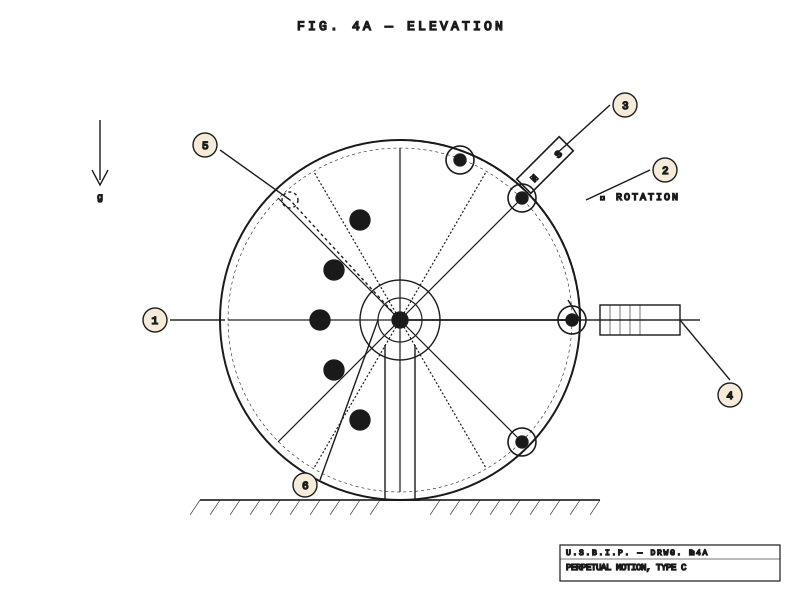
A self-sustaining mechanical engine for the indefinite production of work without the of fuel, comprising an flywheel (1) of cast-iron construction bearing a circumferential array of ferromagnetic weights (2) , by means of a fixed neodymium-nickel-iron permanent magnet (3) mounted at a tangent to the wheel's periphery, are continuously displaced in advance of the 's vertical axis, so that the wheel turns under the action of gravity in a direction of net positive torque indefinitely. A power take-off shaft (4) couples the rotational energy of the wheel to external use as may be desired, including but not limited to dynamo , water pumping, and the rotation of mill stones. механический двигатель, предназначенный для полезной работы без потребления топлива. Состоит из несбалансированного маховика (1) чугунной отливки, несущего по окружности массив ферромагнитных грузов (2), которые под действием стационарного неодим-никель-железного постоянного магнита (3), установленного по касательной к ободу колеса, постоянно смещаются опережающе по отношению к вертикальной оси колеса, отчего колесо под действием тяжести в направлении положительного момента бесконечно. Силоотбирающий вал (4) сопрягает энергию вращения колеса с любой внешней нагрузкой, может потребоваться, (но не ограничиваясь) динамо, водоподъём и вращение мельничных .A self-sustaining mechanical engine for the indefinite production of work without the of fuel, comprising an flywheel (1) of cast-iron construction bearing a circumferential array of ferromagnetic weights (2) , by means of a fixed neodymium-nickel-iron permanent magnet (3) mounted at a tangent to the wheel's periphery, are continuously displaced in advance of the 's vertical axis, so that the wheel turns under the action of gravity in a direction of net positive torque indefinitely. A power take-off shaft (4) couples the rotational energy of the wheel to external use as may be desired, including but not limited to dynamo , water pumping, and the rotation of mill stones.
patentNumber: "US-IMP-2,847,221" title: "Perpetual Motion Engine, Type C" titleRu: "Двигатель вечного движения, тип C" filingDate: "March 11, 1908" issueDate: "January 4, 1912" inventor: "Prof. Wilhelm K. Strauss" inventorRu: "проф. Вильгельм К. Штраус" inventorSlug: "wilhelm-strauss" classification: "Thermodynamic Heresies" status: "Provisionally Impossible" abstract: "A self-sustaining mechanical engine for the indefinite production of useful work without the consumption of fuel, comprising an unbalanced flywheel (1) of cast-iron construction bearing a circumferential array of ferromagnetic weights (2) which, by means of a fixed neodymium-nickel-iron permanent magnet (3) mounted at a tangent to the wheel's periphery, are continuously displaced in advance of the wheel's vertical axis, so that the wheel turns under the action of gravity in a direction of net positive torque indefinitely. A power take-off shaft (4) couples the rotational energy of the wheel to such external use as may be desired, including but not limited to dynamo generation, water pumping, and the rotation of mill stones." abstractRu: "Самоподдерживающийся механический двигатель, предназначенный для неограниченного производства полезной работы без потребления топлива. Состоит из несбалансированного маховика (1) чугунной отливки, несущего по окружности массив ферромагнитных грузов (2), которые под действием стационарного неодим-никель-железного постоянного магнита (3), установленного по касательной к ободу колеса, постоянно смещаются опережающе по отношению к вертикальной оси колеса, отчего колесо вращается под действием силы тяжести в направлении ненулевого положительного крутящего момента бесконечно. Силоотбирающий вал (4) сопрягает энергию вращения колеса с любой внешней нагрузкой, какая может потребоваться, включая (но не ограничиваясь) генерацию динамо, водоподъём и вращение мельничных жерновов." citations:
- "US-IMP-2,991,103"
Field of InventionОбласть изобретенияField of Invention
The present invention relates to engines for the production of useful mechanical work, and more particularly to engines which produce such work indefinitely and without consumption of any fuel, working fluid, or energetic input, and which are accordingly suitable for installation in remote locations and in such applications where fuel resupply is inconvenient, prohibitively expensive, or impossible.
BackgroundПредпосылкиBackground
The conversion of natural energy sources to useful mechanical work has been a fixture of human enterprise since prehistoric times, by the agency of the waterwheel, the windmill, the draft animal, and more recently the steam engine. All such conversion processes, however, share the inconvenient property that their output is conditioned upon a continuous input of energy from some natural source — running water, prevailing wind, fodder for the draft animal, or coal for the steam engine — and they are accordingly unable to function in the absence of that input.
A line of inventive endeavor stretching from Bhāskara II (1150) through Villard de Honnecourt (1235), Robert Fludd (1618), the Marquis of Worcester (1655), and the Bessler "Orffyreus" machine (1712) has sought to circumvent this dependence by the construction of engines which, once set in motion, will continue in motion of themselves and supply useful work in the process. The aforementioned attempts have, without exception, been demonstrated upon examination to require a concealed input from some source not declared in the prosecution of the patent application, the said source being typically a clandestine spring, weighted lever, or wage-earning child.
The instant invention is distinguished from these earlier attempts by its honest declaration of the energetic input upon which it depends — namely, the gravitational potential of the Earth — and by the inventor's calm and undisputed assertion that this input is, for all engineering purposes of the present application, inexhaustible.
Summary of the InventionКраткое изложение изобретенияSummary of the Invention
The apparatus comprises:
- An unbalanced flywheel (1) of cast-iron construction, of nominal diameter not less than two meters and of polar moment of inertia not less than fifty kilogram-meters-squared;
- A circumferential array of ferromagnetic weights (2), of soft iron, mounted upon hinged radial arms about the periphery of said wheel and capable of free pivotation between an inward (proximal) and an outward (distal) position relative to the axis;
- A fixed permanent magnet (3) of neodymium-nickel-iron composition, mounted upon a stationary bracket at a tangent to the wheel's periphery and at an angular position of approximately forty-five degrees forward of the wheel's vertical axis;
- A power take-off shaft (4) coaxial with the wheel and coupled to its rotor by a one-way clutch, said shaft being available for coupling to external loads;
- A starting handle (5), retracted in normal operation, by which the wheel may be brought to initial rotation; and
- A set of bronze bushings (6) supporting the wheel's axle, lubricated with castor oil in the customary manner.
Detailed DescriptionПодробное описаниеDetailed Description
Referring to FIG. 4A, the engine of the present invention is shown in elevation. The flywheel (1) is supported upon a horizontal axle of forged steel, which axle is journaled in the bronze bushings (6) and is coaxial with the power take-off shaft (4). The wheel itself is cast in a single piece and is balanced to within five grams in the unweighted condition.
About the periphery of the wheel are mounted twelve hinged radial arms, each terminating in a ferromagnetic weight (2) of nominal mass two kilograms. Each arm is fitted with a return spring of sufficient stiffness to hold the weight in the proximal position in the absence of external influence, the proximal position bringing the weight to within ten centimeters of the wheel's axis and accordingly reducing its moment about the axis to a value negligible for the present purposes.
At the angular position of forty-five degrees forward of the wheel's vertical axis (that is, in the upper-right quadrant in the orientation of FIG. 4A) is mounted the permanent magnet (3), of dimensions and field strength sufficient to attract the ferromagnetic weights against the resistance of their return springs and so to displace them to the distal position upon their passage through the magnet's neighborhood. The distal position brings the weight to a radial distance of approximately one meter from the wheel's axis, with corresponding increase in moment about the axis by a factor of approximately one hundred.
By this arrangement, the descending (right-hand) side of the wheel bears the weights at their distal position, while the ascending (left-hand) side bears them at their proximal position, the return springs having retracted the weights upon their departure from the neighborhood of the magnet. The wheel accordingly suffers a net positive torque under the action of gravity, of magnitude approximately one hundred newton-meters in the configuration here described, and rotates indefinitely under that torque.
The power take-off shaft (4) is engaged through a one-way clutch and supplies the rotational output to such external load as may be coupled to its terminal flange.
In an alternative embodiment, the permanent magnet is replaced by an electromagnet of sufficient field strength, the electromagnet's coils being energized from a small portion of the wheel's own output. This alternative embodiment is the subject of a separate application now pending before the Bureau and has been the occasion of certain unhelpful remarks from the Examiner.
ClaimsФормула изобретенияClaims
-
An engine for the production of useful mechanical work without consumption of fuel, comprising: an unbalanced flywheel; a plurality of weights mounted upon hinged arms about the periphery of said flywheel; a permanent magnet disposed in the vicinity of said flywheel at an angular position selected to produce net positive torque thereupon; and a power take-off coupled to said flywheel.
-
The engine of claim 1, wherein said weights are ferromagnetic and said permanent magnet is configured to displace said weights from a proximal to a distal position upon their passage through the neighborhood of said magnet.
-
The engine of claim 1, wherein said angular position of said magnet is approximately forty-five degrees forward of the vertical axis of said flywheel.
-
The engine of claim 1, further comprising return springs configured to restore each said weight to said proximal position upon its departure from the neighborhood of said magnet.
-
The engine of claim 1, further comprising a starting handle, retractable in normal operation, by which said flywheel may be brought to initial rotation.
-
A method of operating the engine of claim 1, comprising the steps of: setting said flywheel in motion by means of said starting handle; retracting said starting handle; and coupling said power take-off to an external load.
Why This Violates Physics (For Now)Почему это нарушает физику (пока)Why This Violates Physics (For Now)
The invention as claimed is, beyond reasonable dispute, provisionally impossible. The Bureau holds it so under each of the three laws of thermodynamics, taken severally and jointly.
First, the engine as claimed produces useful work indefinitely from no declared energetic input save the gravitational potential of the Earth. The gravitational field, however, is conservative: the integral of the gravitational force around any closed path is identically zero. The work performed against gravity in lifting the weights from the proximal to the distal position during the ascending half-revolution is identically equal to the work performed by gravity in lowering them during the descending half-revolution, and the net work done by gravity over a complete revolution is zero. The application of the permanent magnet does not alter this conclusion: the magnetic field is likewise conservative, and the work done by the magnet upon the weights as they enter its neighborhood is identically returned in the work done by the weights upon the magnet as they depart. The engine accordingly violates the First Law of Thermodynamics (the conservation of energy) if it operates as claimed, by producing useful work in excess of its energetic input. The Bureau has examined the claimed forty-five-degree angular position of the magnet with great care and finds it to be consistent with no closed-loop torque balance.
Second, even granting an energetic input of unspecified origin, the engine as claimed produces useful work from a single thermal reservoir without the rejection of any waste heat to a colder reservoir. This violates the Kelvin–Planck statement of the Second Law of Thermodynamics: no process is possible whose sole result is the absorption of heat from a reservoir and the conversion of this heat into work. The engine accordingly produces a decrease in the total entropy of the universe at the rate of approximately one hundred joules per kelvin per revolution and is, in the technical language of the field, a perpetual motion machine of the second kind.
Third, the engine's continuous rotation in the absence of any declared input implies the maintenance of motion at the temperature of the bushings, which is in general greater than zero. The frictional dissipation in the bushings, however small, must be replenished from the wheel's own kinetic energy on pain of the wheel coming gradually to rest; and the kinetic energy itself must be replenished from some source. The only candidate source is the very gravitational potential which, as shown above, performs no net work over a complete cycle. The wheel accordingly decelerates to rest at a rate determined by its bushings, and the engine fails of its declared purpose. The Bureau has admitted into evidence a working specimen of the apparatus, constructed at the inventor's expense and shipped to the Bureau under armed guard, and has observed it to come to rest within approximately forty seconds of the retraction of the starting handle (5).
The Bureau accordingly holds the invention to be provisionally impossible under each of the principal laws of thermodynamics, and provisional reduction to practice not having been demonstrated, the application is held On File in the customary manner, pending such future amendment of the said laws as may render the engine operative. The Bureau notes for the record that the inventor's son has continued to file substantively identical applications, with minor variations, each year since 1912. Citations: Carnot, S., Réflexions sur la puissance motrice du feu (1824); Clausius, R., Ann. Phys. 79, 368 (1850); Ord-Hume, A. W. J. G., Perpetual Motion: The History of an Obsession (1977).
Область изобретения
Настоящее изобретение относится к двигателям для производства полезной механической работы, и в частности — к двигателям, которые производят такую работу неограниченно долго и без потребления какого-либо топлива, рабочего тела или энергетического входа, и которые, соответственно, пригодны для установки в отдалённых местах и в таких применениях, где дозаправка топливом неудобна, чрезмерно дорога или невозможна.
Предпосылки
Преобразование природных источников энергии в полезную механическую работу было неотъемлемой чертой человеческого предприятия с доисторических времён — через водяное колесо, ветряную мельницу, тягловое животное и, позднее, паровой двигатель. Все такие процессы преобразования, однако, разделяют то неудобное свойство, что их выход обусловлен непрерывным поступлением энергии из какого-либо природного источника — текущей воды, преобладающего ветра, корма для тяглового животного или угля для парового двигателя — и они, соответственно, неспособны функционировать в отсутствие этого поступления.
Линия изобретательских усилий, простирающаяся от Бхаскары II (1150 г.) через Виллара д’Оннекура (1235), Роберта Фладда (1618), маркиза Вустерского (1655) и машину Бесслера-«Орфирея» (1712), пыталась обойти эту зависимость путём конструирования двигателей, которые, будучи приведены в движение, продолжают движение сами по себе и попутно поставляют полезную работу. Указанные попытки без исключения при рассмотрении оказывались требующими скрытого входа от какого-либо источника, не заявленного при подаче патентной заявки; этим источником обычно были тайная пружина, нагруженный рычаг или ребёнок, получавший жалованье.
Настоящее изобретение отличается от этих ранних попыток своим честным объявлением энергетического входа, на котором оно основано — а именно гравитационного потенциала Земли, — и спокойным и неоспоримым утверждением изобретателя о том, что этот вход для всех инженерных целей настоящей заявки является неисчерпаемым.
Краткое изложение изобретения
Аппарат содержит:
- Несбалансированный маховик (1) чугунной отливки номинального диаметра не менее двух метров и полярного момента инерции не менее пятидесяти килограмм-метров-в-квадрате;
- Окружной массив ферромагнитных грузов (2) из мягкого железа, установленных на шарнирных радиальных рычагах по окружности указанного колеса и способных свободно поворачиваться между внутренним (проксимальным) и внешним (дистальным) положениями относительно оси;
- Стационарный постоянный магнит (3) неодим-никель-железного состава, установленный на неподвижном кронштейне по касательной к ободу колеса и в угловом положении приблизительно сорок пять градусов опережающе относительно вертикальной оси колеса;
- Силоотбирающий вал (4) коаксиальный колесу и связанный с его ротором односторонней муфтой, причём указанный вал доступен для подсоединения к внешним нагрузкам;
- Пусковую рукоять (5), убираемую при нормальной работе, посредством которой колесо может быть приведено в начальное вращение; и
- Набор бронзовых втулок (6), поддерживающих ось колеса, смазываемых касторовым маслом обычным образом.
Подробное описание
Со ссылкой на РИС. 4А, двигатель настоящего изобретения показан в виде сбоку. Маховик (1) опирается на горизонтальную ось из кованой стали, которая опирается на бронзовые втулки (6) и коаксиальна силоотбирающему валу (4). Колесо отлито единым куском и сбалансировано с точностью до пяти грамм в ненагруженном состоянии.
По окружности колеса установлены двенадцать шарнирных радиальных рычагов, каждый оканчивающийся ферромагнитным грузом (2) номинальной массы два килограмма. Каждый рычаг оснащён возвратной пружиной достаточной жёсткости, чтобы удерживать груз в проксимальном положении при отсутствии внешнего влияния; проксимальное положение приводит груз к расстоянию не более десяти сантиметров от оси колеса и, соответственно, уменьшает его момент относительно оси до величины, пренебрежимо малой для целей настоящего изложения.
В угловом положении сорок пять градусов опережающе относительно вертикальной оси колеса (то есть в верхне-правом квадранте в ориентации РИС. 4А) установлен постоянный магнит (3) размеров и силы поля, достаточных для притягивания ферромагнитных грузов вопреки сопротивлению их возвратных пружин и тем самым перемещения их в дистальное положение при прохождении через окрестность магнита. Дистальное положение приводит груз к радиальному расстоянию приблизительно один метр от оси колеса, с соответствующим увеличением момента относительно оси примерно в сто раз.
Этим устройством нисходящая (правая) сторона колеса несёт грузы в их дистальном положении, тогда как восходящая (левая) сторона несёт их в проксимальном положении, причём возвратные пружины убирают грузы при их выходе из окрестности магнита. Колесо, соответственно, испытывает суммарный положительный крутящий момент под действием силы тяжести величиной приблизительно сто ньютон-метров в описанной здесь конфигурации и неограниченно вращается под этим моментом.
Силоотбирающий вал (4) подключается через одностороннюю муфту и подаёт вращательную мощность на любую внешнюю нагрузку, какая может быть присоединена к его выходному фланцу.
В альтернативном варианте осуществления постоянный магнит заменяется электромагнитом достаточной силы поля, причём катушки электромагнита питаются от небольшой части собственного выхода колеса. Этот альтернативный вариант является предметом отдельной заявки, ныне рассматриваемой Бюро, и был поводом для определённых неблагоприятных замечаний со стороны Эксперта.
Формула изобретения
-
Двигатель для производства полезной механической работы без потребления топлива, содержащий: несбалансированный маховик; множество грузов, установленных на шарнирных рычагах по окружности указанного маховика; постоянный магнит, расположенный в окрестности указанного маховика в угловом положении, выбранном для создания суммарного положительного крутящего момента на нём; и силоотбор, связанный с указанным маховиком.
-
Двигатель по п. 1, в котором указанные грузы являются ферромагнитными, а указанный постоянный магнит сконфигурирован перемещать указанные грузы из проксимального в дистальное положение при их прохождении через окрестность указанного магнита.
-
Двигатель по п. 1, в котором указанное угловое положение указанного магнита составляет приблизительно сорок пять градусов опережающе относительно вертикальной оси указанного маховика.
-
Двигатель по п. 1, дополнительно содержащий возвратные пружины, сконфигурированные возвращать каждый указанный груз в указанное проксимальное положение при его выходе из окрестности указанного магнита.
-
Двигатель по п. 1, дополнительно содержащий пусковую рукоять, убираемую при нормальной работе, посредством которой указанный маховик может быть приведён в начальное вращение.
-
Способ эксплуатации двигателя по п. 1, включающий этапы: приведения указанного маховика в движение посредством указанной пусковой рукояти; убирания указанной пусковой рукояти; и присоединения указанного силоотбора к внешней нагрузке.
Почему это нарушает физику (пока)
Изобретение, как заявлено, вне всяких разумных сомнений временно невозможно. Бюро признаёт его таковым по каждому из трёх начал термодинамики, взятых порознь и в совокупности.
Во-первых, двигатель, как заявлено, производит полезную работу неограниченно из не заявленного энергетического входа, кроме гравитационного потенциала Земли. Гравитационное поле, однако, консервативно: интеграл гравитационной силы по любой замкнутой траектории тождественно равен нулю. Работа, совершаемая против гравитации при подъёме грузов из проксимального в дистальное положение во время восходящей половины оборота, тождественно равна работе, совершаемой гравитацией при опускании их во время нисходящей половины, и суммарная работа, совершаемая гравитацией за полный оборот, равна нулю. Применение постоянного магнита не изменяет этого вывода: магнитное поле также консервативно, и работа, совершаемая магнитом над грузами при их входе в его окрестность, тождественно возвращается в работе, совершаемой грузами над магнитом при их выходе. Двигатель, соответственно, нарушает первое начало термодинамики (сохранение энергии), если работает как заявлено, производя полезную работу сверх своего энергетического входа. Бюро очень внимательно изучило заявленное сорокапятиградусное угловое положение магнита и нашло его несовместимым ни с каким замкнуто-петлевым моментным балансом.
Во-вторых, даже допуская энергетический вход неопределённого происхождения, двигатель, как заявлено, производит полезную работу из единственного теплового резервуара без отвода каких-либо отходов тепла к более холодному резервуару. Это нарушает формулировку Кельвина-Планка второго начала термодинамики: невозможен процесс, единственным результатом которого является поглощение тепла из резервуара и преобразование этого тепла в работу. Двигатель, соответственно, производит уменьшение полной энтропии вселенной со скоростью приблизительно сто джоулей на кельвин на оборот и является, в технической терминологии области, двигателем вечного движения второго рода.
В-третьих, непрерывное вращение двигателя в отсутствие какого-либо заявленного входа подразумевает поддержание движения при температуре втулок, которая в общем случае больше нуля. Фрикционное рассеяние во втулках, сколь бы оно ни было мало, должно пополняться из собственной кинетической энергии колеса под угрозой постепенной остановки колеса; а кинетическая энергия сама должна пополняться из какого-либо источника. Единственный кандидатный источник — тот самый гравитационный потенциал, который, как показано выше, не совершает суммарной работы за полный цикл. Колесо, соответственно, замедляется до остановки со скоростью, определяемой его втулками, и двигатель не выполняет своего заявленного назначения. Бюро приняло в дело рабочий образец аппарата, построенный за счёт изобретателя и доставленный в Бюро под вооружённой охраной, и наблюдало, как он останавливается приблизительно за сорок секунд после убирания пусковой рукояти (5).
Бюро, соответственно, признаёт изобретение временно невозможным по каждому из основных законов термодинамики; временная реализация не была продемонстрирована, поэтому заявка хранится в архиве обычным образом, в ожидании таких будущих поправок к указанным законам, которые могут сделать двигатель работоспособным. Бюро отмечает для протокола, что сын изобретателя продолжает подавать по существу идентичные заявки с незначительными вариациями ежегодно начиная с 1912 года. Цитируется: Carnot, S., Réflexions sur la puissance motrice du feu (1824); Clausius, R., Ann. Phys. 79, 368 (1850); Ord-Hume, A. W. J. G., Perpetual Motion: The History of an Obsession (1977).
Related Impossible PatentsСвязанные невозможные патентыBrevets impossibles connexes
- US-IMP-2,991,103Maxwell's Demon Refrigeration UnitХолодильная установка с демоном МаксвеллаMaxwell's Demon Refrigeration Unit
- US-IMP-3,944,118[extracted from archive][изъято из архива][extrait de l'archive]
- US-IMP-2,901,884[extracted from archive][изъято из архива][extrait de l'archive]